
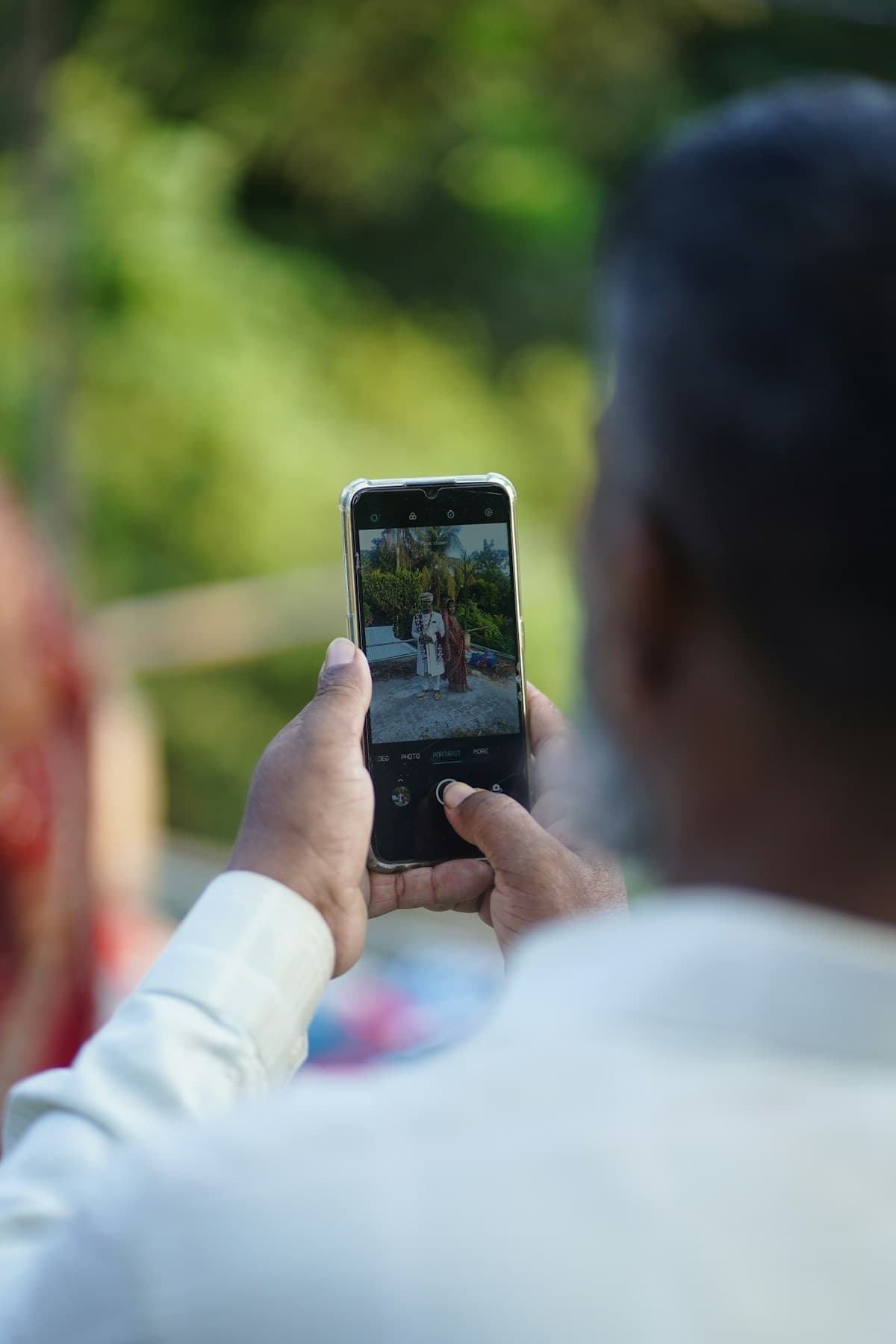
The moment you fix a wedding date, one question follows fast: how do we invite everyone? For most Indian couples in 2026, the answer is no longer "print five hundred cards and hope the courier reaches Patna." It is a digital wedding invitation — shared on WhatsApp, opened on a phone, and rich enough to carry every function, map, and RSVP in one link.
But "digital invitation" has become a catch-all term. A blurry JPEG forwarded in a family group and a cinematic wedding invitation website are both called the same thing. They are not the same experience — and your guests notice the difference immediately.
This guide explains what a digital wedding invitation in India actually means in 2026, why it fits multi-day Indian weddings, what features matter, how costs compare to print, and how to choose a platform that feels premium — not like a PDF attachment.
What counts as a digital wedding invitation in 2026?
A digital wedding invitation is any invite designed to be opened on a phone or laptop instead of delivered as paper. In India, the format usually falls into one of four buckets:
| Format | What guests receive | Best for |
|---|---|---|
| Static image / PDF | JPEG or PDF file in WhatsApp | Quick, free, low effort |
| Video invite | 30–60 sec MP4 with music | Visual impact, single-screen details |
| Canva / template card | Designed graphic, often watermarked on free tiers | DIY couples, small guest lists |
| Web-based invitation | Shareable link → full mobile experience | Multi-event weddings, RSVP, maps, updates |
The last category — a wedding invitation website or interactive e-invite — is the fastest-growing format. Search interest for "wedding invitation website" in India rose roughly 83% year-over-year (RankHero, 2025–2026). Couples are moving from "send a picture" to "send a link" because Indian weddings need more than one screen of information.
A proper wedding e-invite link opens into a scroll-based experience: couple names, animated opening, event timeline (mehendi, haldi, sangeet, wedding, reception), Google Maps per venue, countdown timer, photo gallery, background music, and built-in RSVP. Guests tap once from WhatsApp — no app download, no account.
That is the bar in 2026. Anything less is a notification. A great digital invite is the opening chapter of your wedding story.

Why Indian weddings need digital invitations
Indian weddings are not one event on one evening. They are three to five days across multiple venues — mehendi at home, haldi in the morning, sangeet at a hotel, pheras at the mandir, reception on Sunday. Often two cities and two families are involved.
Paper cards struggle with this scale. You either print separate inserts for each function (expensive, easy to lose) or cram unreadable text onto one card (guests miss the haldi time entirely).
Digital invitations solve problems that are specific to how Indian families actually plan:
WhatsApp is the default channel. According to WeddingWire India's Newly Wed Survey (2,100+ couples), 79% share wedding details via WhatsApp, and 58.6% use it for all wedding-related communication. Your invite must be built for link sharing and rich previews — not email attachments.
Guest lists are large and scattered. College friends in Bangalore, cousins in Dubai, colleagues in Pune, elders in the hometown. A digital invite reaches everyone in seconds at zero per-person cost.
Details change. Muhurtham shifts by thirty minutes. The sangeet venue moves to a bigger hall. With a web invite, you update once — every guest sees the latest version. Reprinting is not an option at 11 PM.
RSVP chaos is real. "Count me in!" on WhatsApp is not a headcount. Built-in RSVP tracking collects attendance per event, guest count, and dietary preferences (veg, Jain, allergies) in one form — so catering and seating are based on data, not guesswork.
NRI and out-of-town guests need context. Maps, accommodation notes, dress code per function, and a countdown help guests who are flying in from Singapore or San Francisco plan without ten follow-up calls.
Must-have features for a digital wedding invitation
Not every platform delivers the same thing. When evaluating an online wedding invitation maker in India, use this checklist:
1. Multi-event timeline in one link
Mehendi, haldi, sangeet, wedding, reception — each with date, time, venue, and dress code. One URL, structured clearly. Guests should never hunt through WhatsApp chat history for "what time is haldi?"
2. WhatsApp-ready sharing with link preview
When you paste your invite link in WhatsApp, it should show a beautiful preview (title, description, image) — not a raw URL. This is controlled by Open Graph metadata and is non-negotiable for Indian sharing culture.
3. Built-in RSVP
Guests confirm attendance from the invite itself. You see responses in a dashboard — no spreadsheet, no chasing relatives on phone calls.
4. Google Maps per venue
Indian weddings often use three different locations across five days. Tap-to-navigate maps reduce "where exactly is the venue?" messages by half.
5. Mobile-first design
Over 70% of wedding-related searches in India happen on mobile. If your invite only looks good on desktop, it will fail where it matters — on your aunt's iPhone in portrait mode.
6. Personalization
A greeting with the guest's name (?guest=Aunty+Rekha) turns a mass link into a personal invitation. Some families send different links so family sees haldi details and office colleagues see reception only.
7. Premium feel — not a template dump
Envelope animation, background music, cinematic scroll, curated typography. Your wedding is not generic. Your invite should not look like every other Canva card in the group.

Digital vs printed wedding invitations: cost in India
Cost is the question every family asks — often in the same breath as "but what will the elders say?"
Printed cards in India typically run ₹40–₹300 per card depending on paper, foil, and inserts. For 500 guests, that is ₹20,000–₹1,50,000+ before courier and reprints. Luxury box invitations for close family can exceed ₹1,500 per card.
Digital invitations are usually a one-time design/platform fee — from free tiers on basic tools to ₹999–₹15,000 for premium custom experiences. Distribution cost: zero. Update cost: zero. Reach: unlimited.
Here is the nuance: 54% of Indian couples still use physical wedding invitations (WeddingWire India). The smart 2026 approach is hybrid — printed cards for 50–100 elders and VIPs, digital for everyone else. You keep tradition where it matters and save 40–60% on overall stationery spend.
We cover the full hybrid strategy — who gets what, QR codes on printed cards, and budget math — in our digital vs printed wedding invitations guide for India. For the global perspective, see the international edition. Digital is not "cheap because we cut corners" — it is efficient because you are not paying per guest for paper and postage.
How to choose the right platform
Avoid picking the first free tool you find on Instagram. Ask these questions before you commit:
- Does it handle a full Indian multi-day timeline? Mehndi through reception in one flow — not five separate links.
- Is RSVP built in? For both you and your least tech-savvy relative.
- Can guests open it without installing an app? A browser link is essential.
- Does the WhatsApp preview look premium? Test by forwarding to yourself first.
- Can you personalize per guest or guest group? Family vs friends often see different events.
- Does it feel cinematic? Scroll storytelling, music, animation — or does it look like a Google Form with a background colour?
- Can you update details after sending? Venue changes happen. Your invite should keep up.
Platforms like Canva work for static cards but rarely deliver the full wedding invitation website experience — timeline, live RSVP, maps, and music in one link. That is where purpose-built tools like Vow Invites focus: cinematic, scroll-based e-invites designed for Indian weddings and WhatsApp-first sharing.
Digital invitation vs wedding website — what is the difference?
The terms overlap, but there is a useful distinction:
- A digital invitation is the guest's first touchpoint — emotional, visual, "you're invited."
- A wedding website extends into logistics — travel, accommodation, FAQ, registry, photo uploads.
Many couples in 2026 combine both in one link: the invite opens with a cinematic hero and envelope animation, then scrolls into timeline, maps, gallery, and RSVP. Guests bookmark one URL and return for updates. You do not need two separate products.
If your platform forces you to choose between "pretty card" and "functional website," you are solving yesterday's problem.
Related guides
Explore more on the Vow Invites blog:
- WhatsApp wedding invitation India — broadcast lists, elder etiquette, link previews
- Wedding RSVP tracking India — stop chasing confirmations on phone calls
- Multi-event wedding invitation India — mehendi, haldi, sangeet in one link
- Digital vs printed wedding invitations India — hybrid strategy most families use
Create your invite now if you already know what you need.
Planning a wedding outside India or want a broader overview? Read our global guide to digital wedding invitations.
Frequently asked questions
Are digital wedding invitations acceptable in India?
Yes — and increasingly expected for extended family, friends, colleagues, and NRI guests. WeddingWire India's survey shows 79% of couples already share wedding details digitally via WhatsApp. For close elders, many families still hand-deliver a printed card while sending the digital link for convenience and RSVP. The hybrid approach is the 2026 norm, not the exception.
Can one digital invitation cover all wedding functions?
Absolutely. A web-based digital wedding invitation India couples use in 2026 typically includes every function — mehendi, haldi, sangeet, wedding, reception — in a single timeline. Each event gets its own date, time, venue, dress code, and map. Guests scroll through one beautiful page instead of juggling five PDFs in WhatsApp.
What is the difference between an e-invite and a wedding website?
An e-invite is the invitation experience — names, dates, emotional design, "please join us." A wedding website adds logistics — travel, hotels, FAQ, registry. The best platforms merge both into one shareable link: cinematic invite at the top, practical details below. Guests need one bookmark, not three.
How much do digital wedding invitations cost in India?
Basic template tools are free to low cost (₹0–₹1,500). Premium online wedding invitation maker platforms with custom design, animation, and RSVP dashboards typically range ₹999–₹15,000 as a one-time fee — regardless of guest count. Compare that to ₹20,000–₹1,50,000+ for 500 printed cards, and the math favours digital for at least part of your list.
Is a PDF on WhatsApp good enough?
For a small, informal gathering — maybe. For an Indian wedding with multiple events, hundreds of guests, and dietary tracking for catering? A PDF is the floor, not the ceiling. PDFs compress badly on WhatsApp, cannot track RSVPs, cannot update venue changes, and do not show a rich link preview. A wedding e-invite link solves all of that in one tap.
Do guests need to download an app?
No — and they should not have to. The best digital wedding invitations open in any mobile browser from a WhatsApp link. If a platform requires guests to install an app or create an account just to view your invite, skip it. Your 75-year-old chacha will not download anything. He will tap a link.