
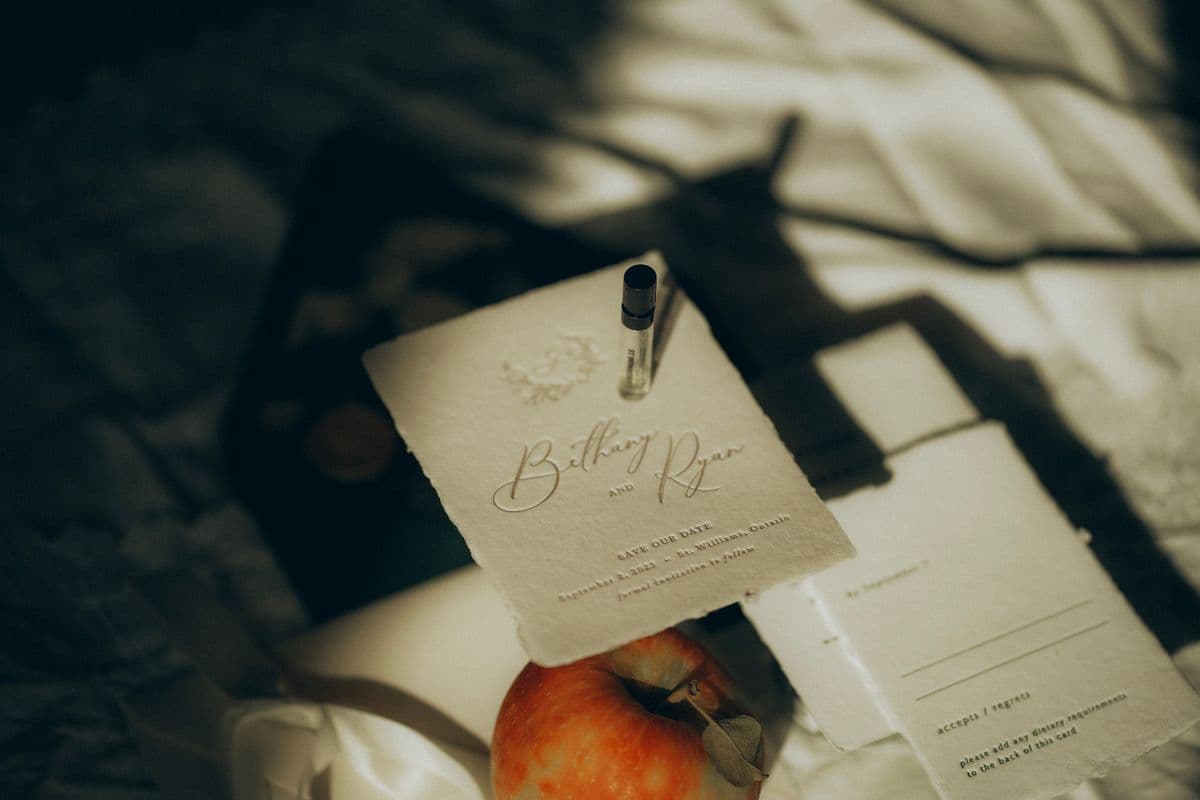
You just got engaged. Before you book the caterer, finalize the guest list, or choose a venue, there is one thing your guests need first: the date. A digital save the date gives them that — a short, shareable message that locks your wedding date on their calendars months before the formal invitation arrives.
Unlike a full digital wedding invitation, a save the date is not about event schedules, venue maps, or RSVPs. It is a heads-up. "We are getting married. Here is when. Details to follow." That simplicity is exactly what makes it effective — and why getting the timing, wording, and delivery channel right matters more than most couples expect.
This guide covers when to send your online save the date, what to include (with ready-to-copy wording templates), and how to share it across text, email, and WhatsApp so every guest actually sees it.
When to send a digital save the date
Timing is the entire point of a save the date. Send it too early and guests forget. Send it too late and they have already made other plans.
The standard window: 6–9 months before the wedding.
That gives guests enough lead time to request time off, book travel (especially for destination weddings), and block the date — without being so far out that it feels abstract.
Here is a practical timeline:
| Milestone | When | What to send |
|---|---|---|
| Engagement | Day of | Nothing formal — just celebrate |
| Save the date | 6–9 months before | Date + city + "formal invite to follow" |
| Formal digital invite | 6–8 weeks before | Full details, RSVP, timeline, maps |
| RSVP deadline | 3–4 weeks before | Built into your invite or a reminder |
Destination weddings or holiday weekends: Push save the dates to 9–12 months out. Guests booking international flights need that runway.
Short engagements (under 6 months): Skip the save the date entirely and send a formal digital invitation with enough lead time — at least 6–8 weeks before the wedding.
What to include (and what to leave out)
A save the date is not an invitation. Keep it lean. Guests should be able to read it in under ten seconds.
Include:
- Both names (or couple's names together)
- Wedding date
- City or general location (not the exact venue — that can change)
- "Formal invitation to follow"
- Optional: a link to your wedding website or a save the date with RSVP link for early headcount tracking
Leave out:
- Full event schedule (rehearsal, ceremony, reception)
- Venue addresses and maps
- Dress code
- Gift registry
- Accommodation details
Those belong in your formal invitation. Including them now creates confusion — especially if details change between now and the wedding.
Copy-paste wording templates
The tone of your save the date sets expectations. Below are five templates you can copy, customize, and send. Adjust the formality to match your wedding style.
Classic and formal
Sarah Mitchell & James Carter
are getting married
October 18, 2026
Austin, Texas
Formal invitation to follow.
Warm and conversational
We said yes! 💍
Emma & Liam are tying the knot on March 7, 2027 in Portland, Oregon.
Save the date — details coming soon.
We cannot wait to celebrate with you.
Short and direct (best for text / WhatsApp)
Save the date! Priya & Daniel — June 14, 2027, San Francisco. Invitation to follow. ✨
Destination wedding
You are invited to join us abroad.
Rachel & Marco are getting married on September 20, 2027 in Positano, Italy.
Save the date — travel and accommodation details will follow in your formal invitation.
Start dreaming about that trip. We will handle the rest.
Save the date with RSVP link
Anika & Jordan are getting married!
November 8, 2027 · Nashville, Tennessee
We would love to know if you can make it — even this early.
A formal invitation with all the details will follow closer to the date.
The last template works especially well as a save the date with RSVP link — it gives you an early headcount without waiting for the formal invitation cycle. Platforms like Vow Invites let you embed a quick RSVP directly in the save the date link.
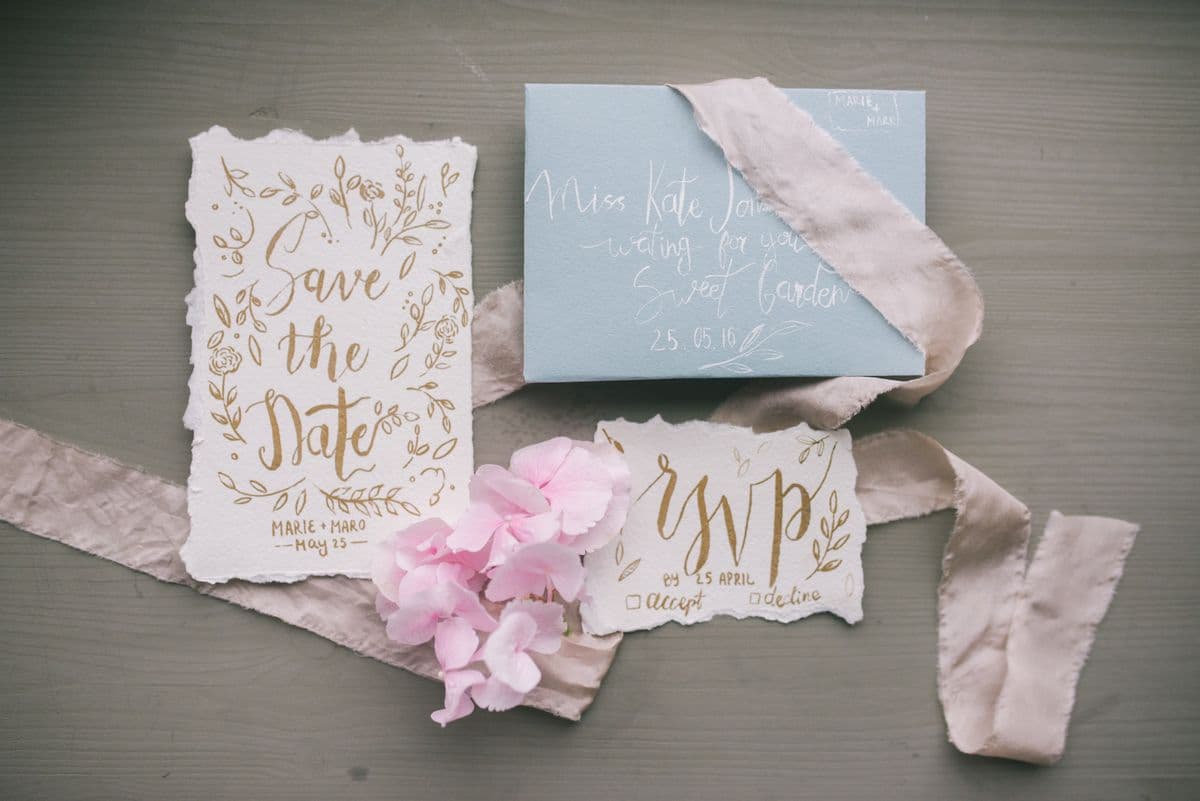
How to share your digital save the date
The channel you use to send a save the date matters as much as the wording. Different guests check different places.
Text message / iMessage
Best for close friends and family. Keep the message short — one to three lines plus a link. Near-100% open rates.
Tip: If sharing a web-based link, test it first. Make sure it shows a rich preview (image, title, description) rather than a raw URL.
Best for larger guest lists, colleagues, and international guests. Use a clear subject line like "Save the Date — Sarah & James, October 18" so it does not land in spam.
Tip: Send from a personal email address. Gmail and Outlook filter bulk sends from unfamiliar platforms.
The dominant channel for wedding communication globally. Works for individuals and small groups — but avoid dumping a save the date into a large family group with no context.
Best practice: Send individually or via a broadcast list (one-to-many, not a group chat). A web-based invite link shows a rich preview card in WhatsApp — far better than a compressed image.
Social media
Some couples announce on Instagram or Facebook. This works as a public announcement but should not replace direct messages to confirmed guests. Social posts get buried — a save the date should not depend on an algorithm.
Digital save the date vs formal invitation: what is different?
Couples sometimes wonder whether a save the date replaces the formal invitation. It does not. They serve different roles at different stages.
| Save the date | Formal invitation | |
|---|---|---|
| Purpose | Reserve the date | Provide full event details |
| Timing | 6–9 months before | 6–8 weeks before |
| Content | Names, date, city | Full schedule, venues, maps, dress code |
| RSVP | Optional early check | Required with deadline |
| Tone | Brief, excited | Complete, polished |
| Updates | Rarely needed | May update venue, time, etc. |
Think of the save the date as the teaser. The formal invitation — ideally a cinematic digital invite with timeline, RSVP, and maps — is the full experience.
Common mistakes to avoid
Sending to people you might not invite. A save the date implies an invitation is coming. Only send it to guests on your confirmed list.
Including too much detail. Venue addresses and accommodation blocks change. A save the date with outdated details creates more confusion than no save the date at all.
Using only a group chat. Your save the date gets buried under replies and memes within hours. Send individually or via broadcast.
Forgetting international guests. If guests span time zones, schedule your message so it does not arrive at 3 AM.
Skipping the save the date for a big wedding. If your guest list tops 100 or includes out-of-town travelers, a save the date is not optional — it is a courtesy.
Related guides
Explore more on the Vow Invites blog:
Global track
- Digital wedding invitations: complete guide — the full pillar on formats, costs, and features
- Engagement party digital invitations — timing, wording, and RSVP for your celebration
- WhatsApp wedding invitation guide — rich link previews, broadcast lists, and sharing etiquette
India track — Digital wedding invitations in India plus guides on WhatsApp etiquette and multi-day events.
Create your save the date now →
Frequently asked questions
Is a digital save the date appropriate for a formal wedding?
Yes. The format does not determine formality — the design and wording do. A well-designed digital save the date with elegant typography and a polished link preview feels just as intentional as a printed card. Send it personally (not via a mass group post) and match the wording to your wedding's tone.
Can I include an RSVP link in a save the date?
You can, and many couples do. An early RSVP link gives you a rough headcount months before the formal invitation — helpful for venue sizing and catering estimates. Just make it clear that the full invitation (with final RSVP deadline) will follow. Platforms like Vow Invites support early RSVP collection built into the save the date link.
How far in advance should I send a digital save the date?
Six to nine months before the wedding for most celebrations. For destination weddings or holiday weekends, send nine to twelve months out so guests can plan travel and book time off. If your engagement is shorter than six months, skip the save the date and send a formal digital invitation at least six to eight weeks before the wedding.
Should I send a save the date by text, email, or WhatsApp?
Use the channel each guest checks most. Text and WhatsApp have near-100% open rates — ideal for close friends and family. Email suits larger lists and international contacts. Many couples mix channels: text for inner circle, email for the broader list, WhatsApp for family. Send individually or via broadcast, not into a noisy group chat.
Do I need both a save the date and a formal invitation?
For weddings with 100+ guests or out-of-town travelers, yes. The save the date reserves the date early (6–9 months out); the formal invitation provides full event details, RSVP, and logistics (6–8 weeks out). For smaller local weddings with a short engagement, a single well-timed digital invitation can cover both.
What if my wedding details change after I send the save the date?
That is exactly why save the dates include minimal details — just names, date, and city. If the date itself changes, send a brief update through the same channel: "Quick update — our wedding date has moved to [new date]. Updated invitation to follow." If only the venue or time changes, no update is needed until the formal invitation.